- Synthetic: Leadership Intelligence
- Posts
- The Robots Are Coming! 🤖
The Robots Are Coming! 🤖
And, Should We Move Data Centers to Outer Space? 🪐

Steve Brown
January 08, 2026
Subscribe to Synthetic
This week’s most interesting and relevant AI news and analysis
Remember, you can read past editions of Synthetic here.
This Week in AI and Robotics 🧠 🤖
If you missed last week’s review of 2025 and projections for 2026, check it out here.
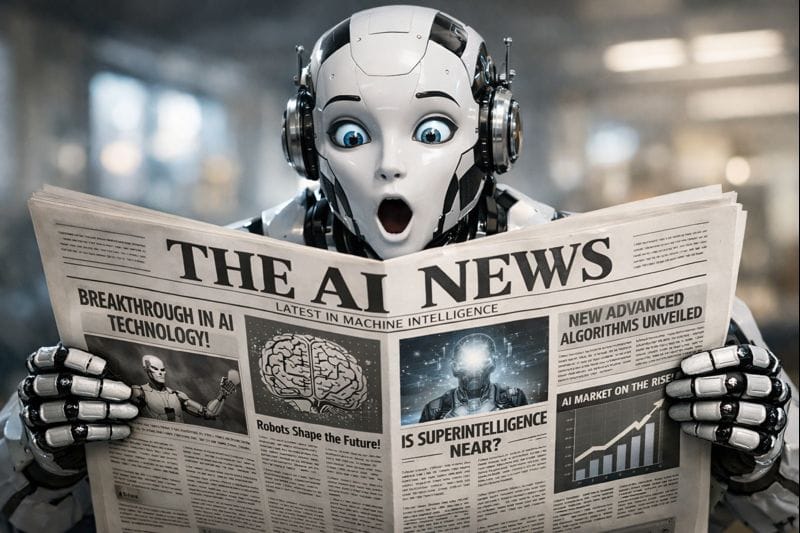
Welcome to 2026! If you thought last year in AI was crazy, buckle up. 2026 will be a doozy.
It’s a big week in AI as tech giants and startups jostle for attention in the crazy bun fight that is the Consumer Electronics Show (CES). From AI-enhanced TVs to humanoid robots, CES has become a showcase for all things AI. NVIDIA CEO Jensen Huang even used a Las Vegas stage to announce details of his latest AI chips.
When Jensen Huang talks, the world listens. At least everyone in the AI world. This year at CES, the NVIDIA CEO announced his company has already begun production on its new Vera Rubin platform, due to ship in volume in Q3’26. This new AI supercomputer platform will power the AI data centers of 2027, delivering 5x the performance and reducing operating costs by 10x over the previous generation. NVIDIA also announced Alpamayo, an open-source reasoning model for autonomous vehicles (AVs). NVIDIA has been working on this model for over 8 years and will give it away to automakers to kickstart the AV industry. Their first partner, Mercedes-Benz, will ship Alpamayo self-driving features in its CLA vehicles this summer. Partners Jaguar Land Rover, Lucid, and Uber won’t be far behind.
For several years now, cool videos of humanoid robots dancing, jumping, and then finally doing semi-useful things like loading a dishwasher have flooded the internet. We have showcased some of them here on Synthetic. The underlying AI models and technology have continued to evolve, and AI-powered humanoid robots are now getting ready for prime time—In a factory, fulfillment center, or home near you. One of the leaders in the space, Boston Dynamics, gave a live demonstration of its Atlas robot on stage at CES, and revealed a non-working model of their newest Atlas, a beefier, more industrial-looking model that can lift 110 pounds (50kg) and has interchangeable batteries that it can swap out itself, enabling near-continuous use. Boston Dynamics is now majority-owned by the Hyundai Motor Company, and the first production of Atlas robots will be deployed in Hyundai’s factories. Boston Dynamics also announced a new partnership with Google DeepMind to bring Gemini AI capabilities to their robots.
Synthetic’s Take: It’s an exciting time in robotics. Often, people I meet tell me they don’t expect robots to be viable for at least another five years. But you can pre-order a home humanoid robot NOW, to be delivered this year, for $20,000 or $499/month from robot company, 1X. Yep, this year. Robots are coming, and fast.
“I call AI and robotics the supersonic tsunami.”
Quick Hits 🚀
Figure CEO Predicts Incredible Robot Capabilities in 2026 - In a pre-Christmas tweet, Figure CEO Brett Adcock predicted humanoid robots will perform unsupervised, multi-day tasks in homes they’ve never seen before, driven entirely by neural networks (no remote control by humans) by the end of the year. Wow! 🤩
Ford Announces AI Voice Assistant and Self-Driving Coming in 2028 - At CES, the automaker announced it will launch a new voice assistant in ‘26 and ‘27, and that its BlueCruise driving assistant will reach Level 3 autonomous driving on some of its vehicles in 2028. 🚙
Artificial Intelligence Begins Prescribing Medications in Utah - This pilot program is a test of patients’ and regulators’ trust in AI. At first, it will be focused on prescription refills. 💊
Caterpillar Integrates AI into its Construction Equipment - The storied company is partnering with NVIDIA to add AI agents able to answer questions from machine operators. More on this story from NVIDIA here. 🚜
GoogleTV’s New Gemini Features Range from Useful to Unnecessary - Google has announced AI upgrades to its GoogleTV operating system found on Sony, TCL, Hisense, Sharp, and other TVs. From dialogue boosting to an interactive on-screen teacher, the new release gives us a glimpse of what may be coming to a TV screen near you soon. 📺
Videos of the Week 🎥
This week, 60 Minutes ran a story on humanoid robots, focusing on Boston Dynamics, which announced a new version of its Atlas robot at CES this week. If you’re curious to see what the latest in AI and robotics technology looks like, look no further than this report. (13m 16s)
Tech giants and myriad startups are all trying to figure out what the next big device in our lives will be. AI-first devices like the Rabbit R1 and AI Pin have come and quickly faded to obscurity. Here at Synthetic, our gut tells us the next device we all covet will be on our faces: specifically, AI-powered glasses, either with or without augmented reality displays. Apple is rumored to launch new AI glasses this year and Google is partnering with Warby Parker to deliver AI glasses, too. This next video caught our eye. Will Pickle become the next iPod or iPhone and suddenly burst onto the cultural scene? Unlikely. But their idea of using AI to capture memories, and catalog your life in “bubbles” so the AI assistant can better serve you, is a fresh and interesting approach. (5m 47s)
AI Insights and Analysis 🔮

It might seem like a crazy idea, but serious tech companies, including Google with their Project Suncatcher moonshot effort, are now talking about building AI data centers in orbit. Why even consider this seemly mad idea of putting AI in space? For one, it would simplify data center cooling when it’s -240 degrees outside. And there is abundant solar energy available to power them when in a 24/7-sunshine polar orbit. Since a lot of internet traffic travels via satellite connections, putting data centers near to those satellite constellations might also reduce latency and improve the responsiveness of AI.
The “DoorDash problem” describes how AI agents that order services for users could cut out traditional apps and websites—erasing reviews, ads, loyalty programs, and direct customer relationships that companies like DoorDash, Uber, or Airbnb depend on. This shift threatens existing internet commerce models and has sparked a major fight over control of the web’s economic future. The conflict surfaced when Amazon sued AI startup Perplexity, accusing its Comet browser’s AI agent of violating Amazon’s terms and conditions by automating shopping on its site. This marks a key moment in the emerging battle over AI agents and who “owns” digital customer interactions.
AI Tech and Innovation 💡
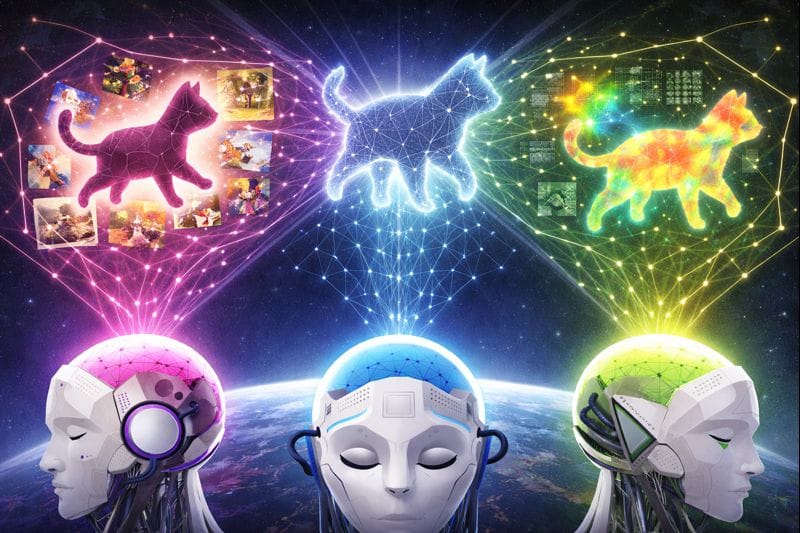
Researchers have found that very different kinds of AI systems—for example, language models that process text and vision models that analyze images—may be developing similar internal ways of representing the world as they become more advanced. By examining how these models encode concepts such as objects or ideas as patterns of numbers, scientists see that the “shape” of these internal representations starts to look alike across models trained on different tasks and data. Some think this suggests AI systems are converging on a common, underlying way of capturing reality, almost like discovering a shared blueprint behind diverse experiences.
Synthetic’s Take: As researchers work to create universal AI models that understand the world and how it works—so called ‘World Models’—the area of study is sure to fuel much conversation in the coming months.
Tool of the Week ⚙️
Each week we highlight a new tool for you to try as part of expanding your personal AI acumen and investing in your own future. This week…
With ElevenLabs you can easily add a helpful AI assistant for your company website so customers can interact with your business conversationally. Choose a hyper-realistic voice, give your assistant a simple prompt (e.g., “You are a helpful customer service agent for keynote speaker, Steve Brown”), upload relevant FAQ documents, and integrate it with your website. Done in minutes! Personally, I found it incredibly easy to use and you can see it running on my website. Best of all, you can try it for free.

Finally, if you’re interested to learn more about AI, be sure to grab a copy of The AI Ultimatum: Preparing for a World of Intelligent Machines and Radical Transformation, my latest book. It’s a how-to-guide for business leaders on AI transformation. You’ll learn about the different flavors of AI, what business problems you can solve with which type, where AI is going next, and what you need to do to get ready. It’s packed with useful frameworks to help you build your AI strategy and it’s all written in easy-to-access language. No tech speak here.
Right now, Amazon is discounting the hardback, so order yours quickly to get the hardback edition for the same price as the paperback!! Hey, maybe get a copy for each member of your team! 😀
Order ‘The AI Ultimatum’ Here Now. I hope you love it!
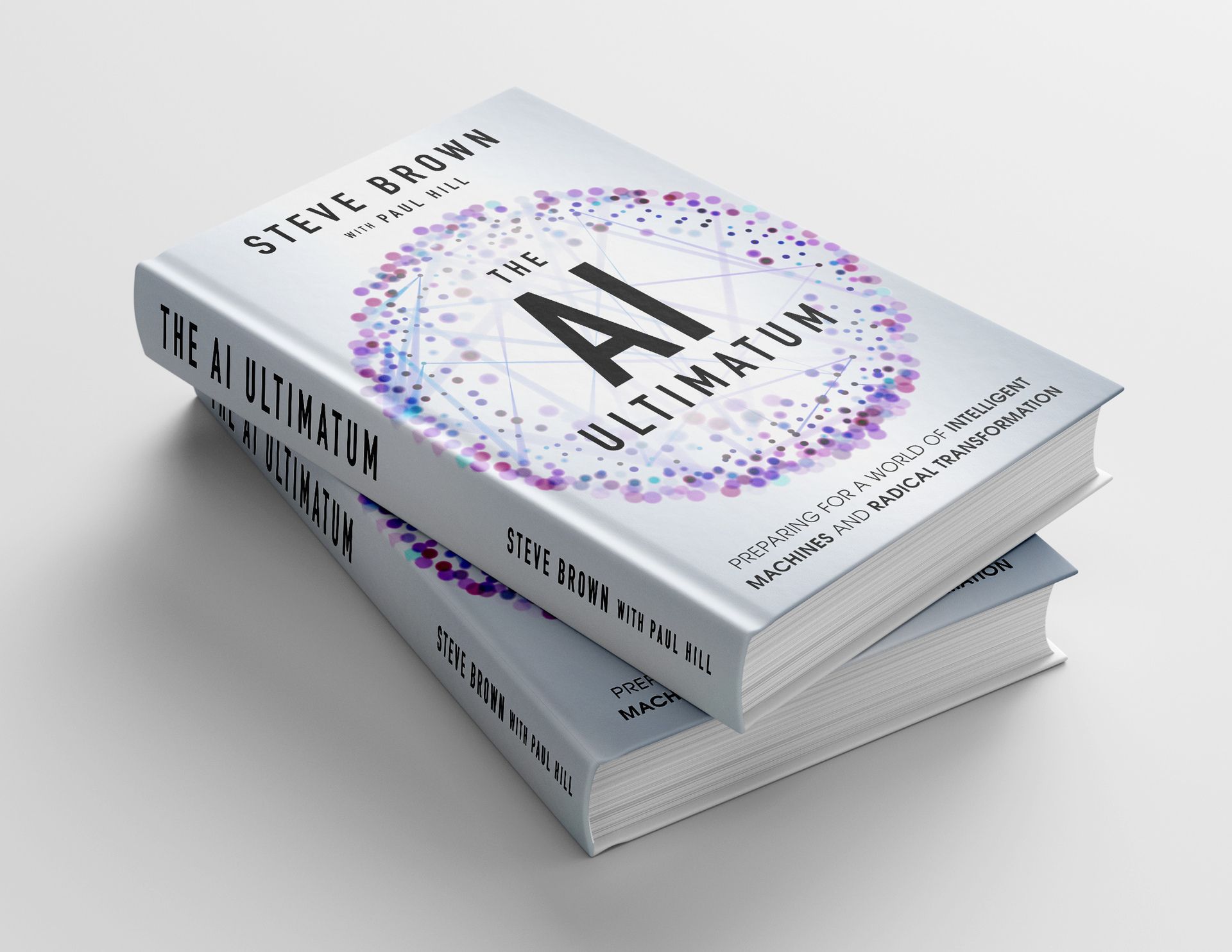
The AI Ultimatum: Preparing for a World of Intelligent Machines and Radical Transformation